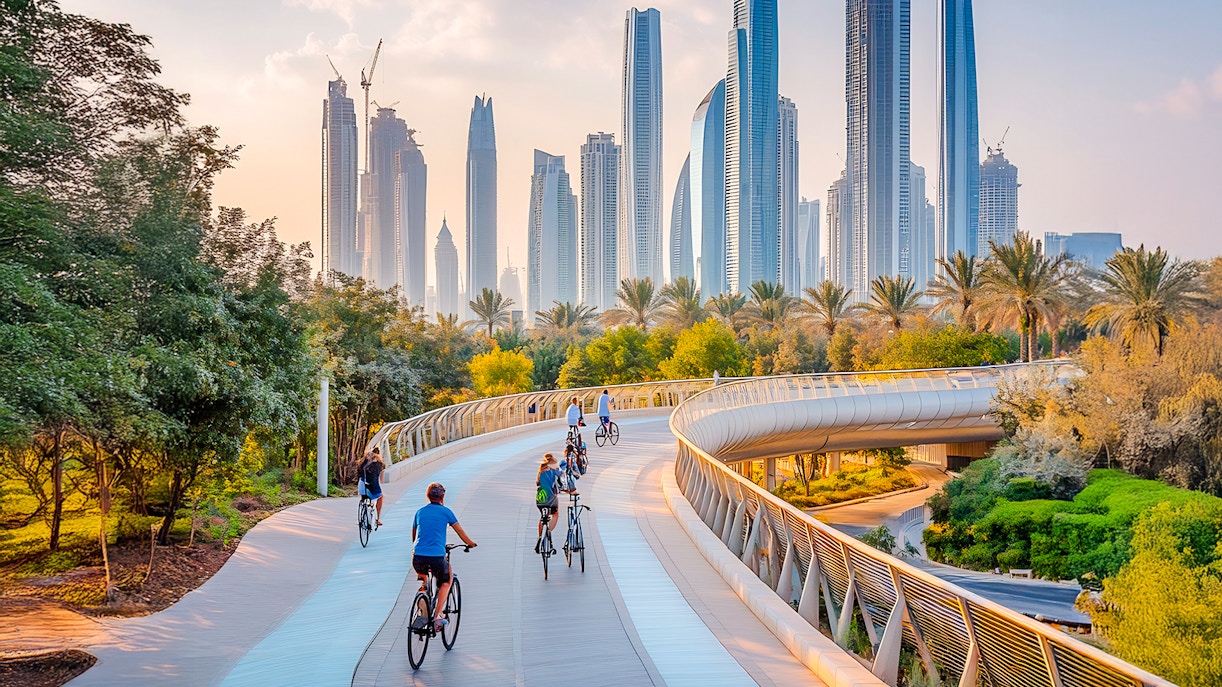
Your guide collects you from your hotel in an air-conditioned vehicle. You
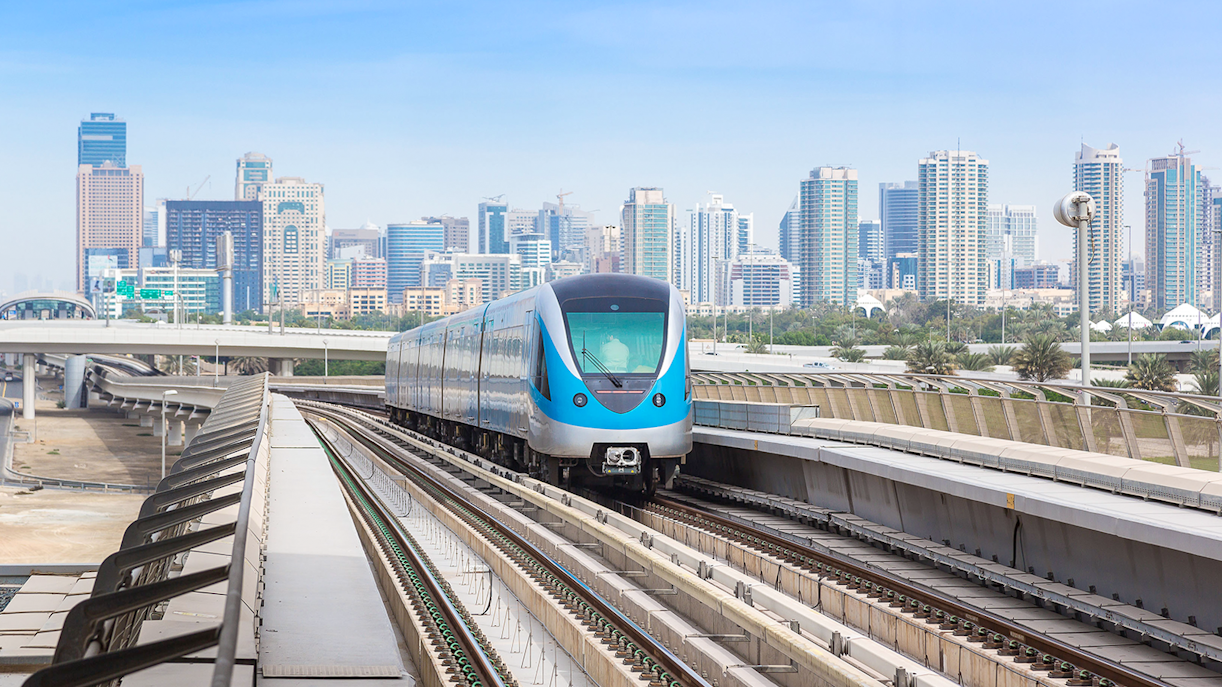
Hotel pickup, no planning needed, don't need to find a meeting point, buy a Nol card, or figure out parking.
Old Dubai on foot
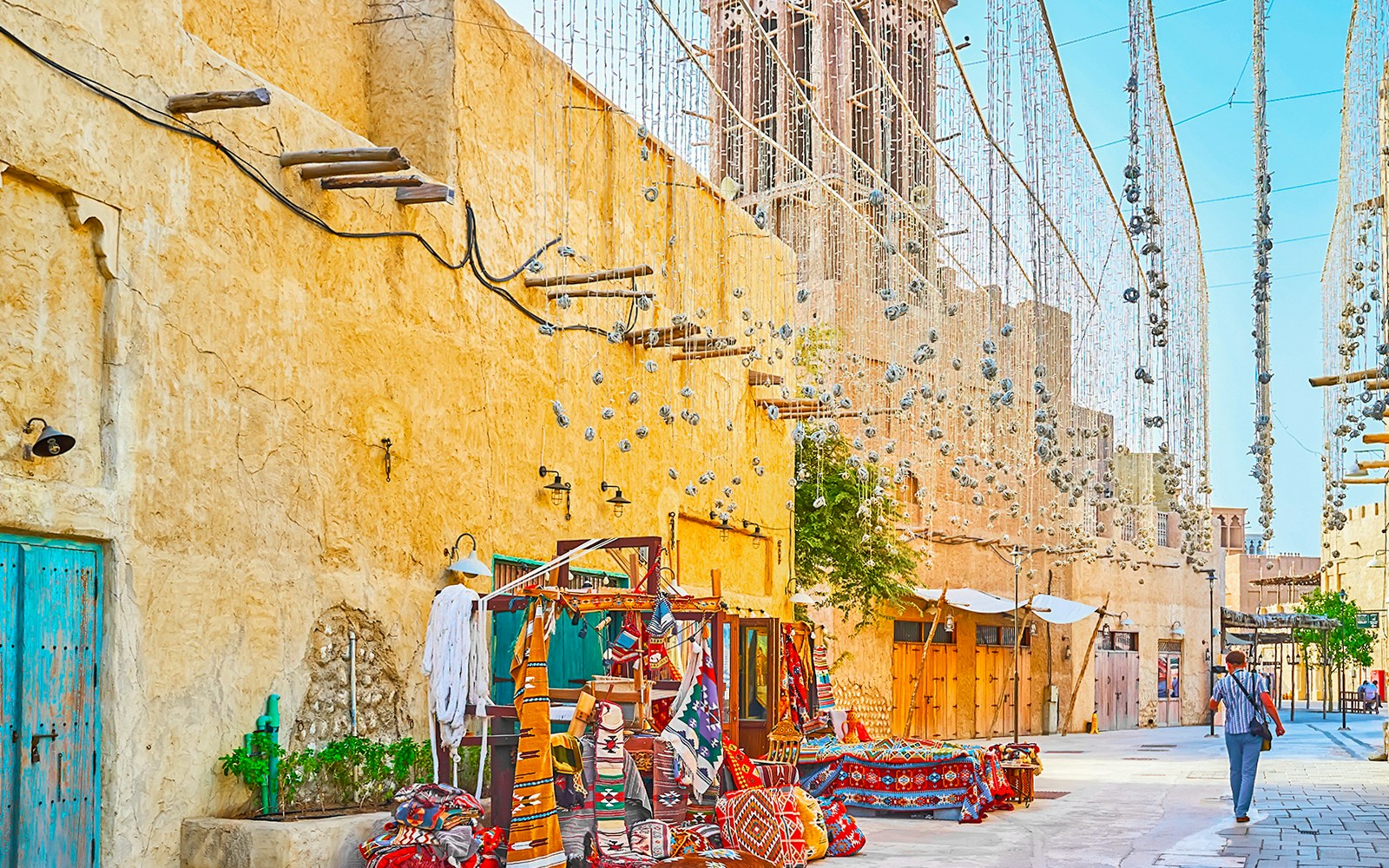
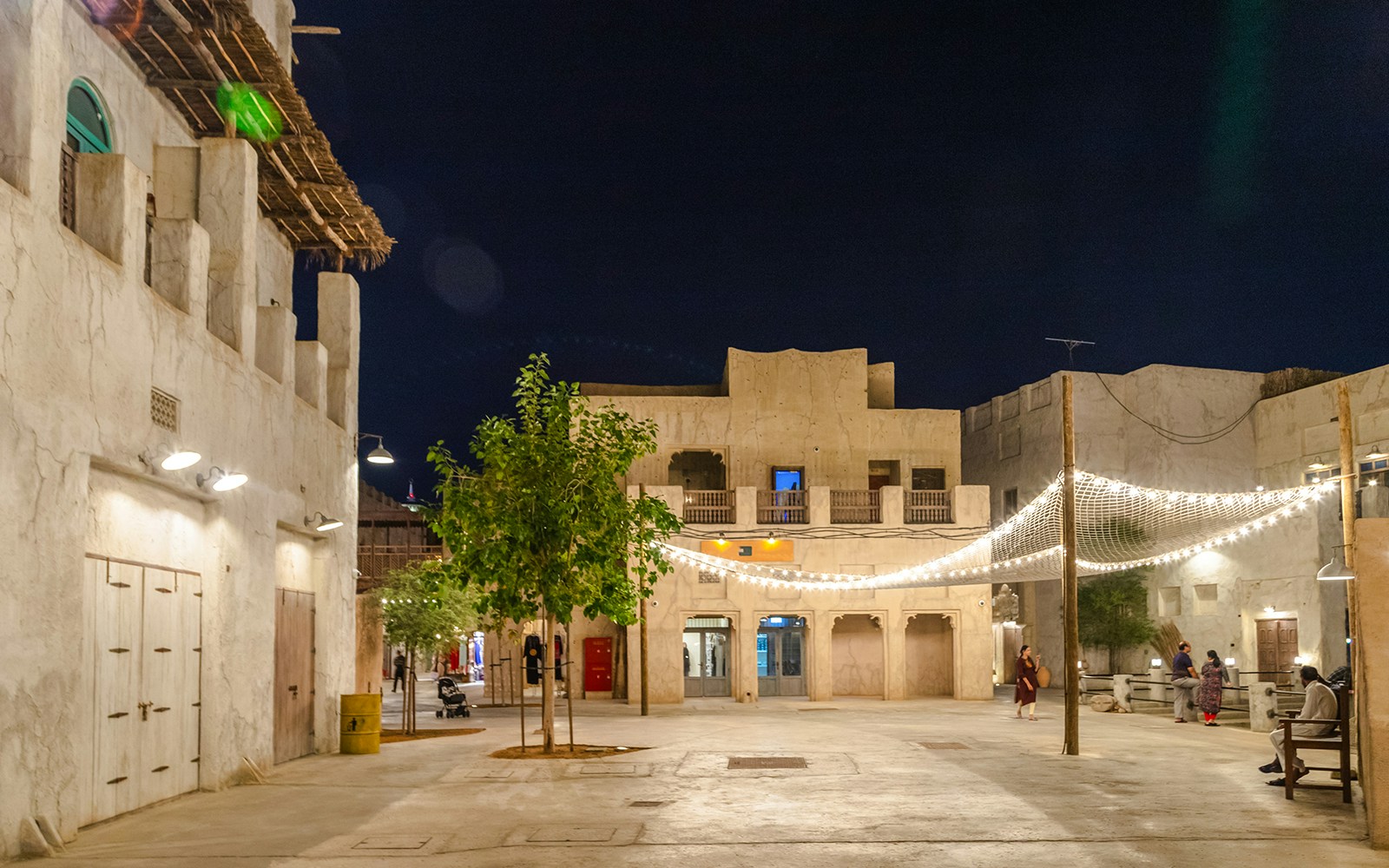
Every tour passes through the Al Fahidi Historical District, Dubai's oldest neighborhood, untouched by the skyline around it. Narrow lanes, coral-stone walls, wind towers that cooled rooms before electricity existed.
A creek crossing that costs AED 1 (in select tours)
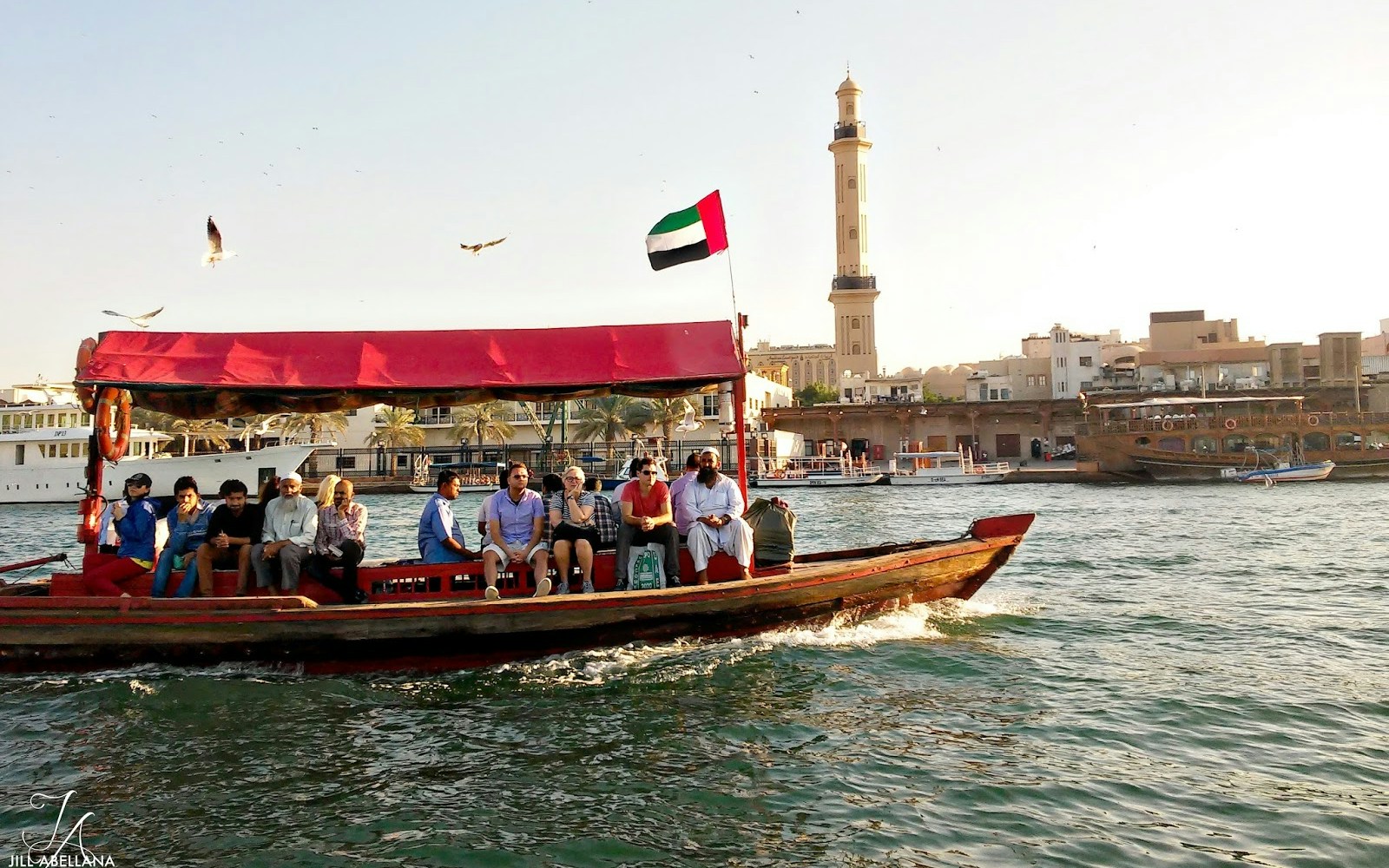
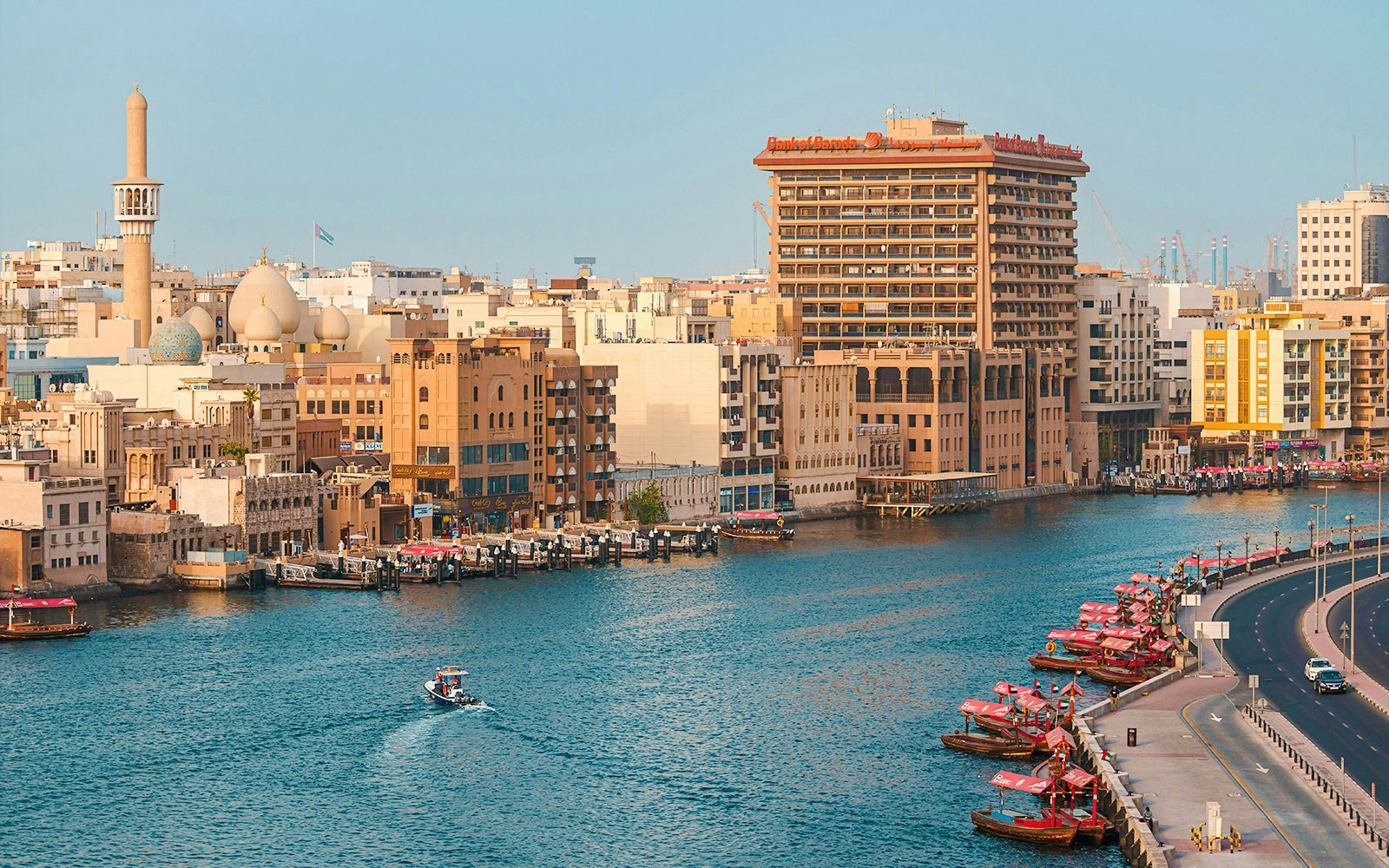
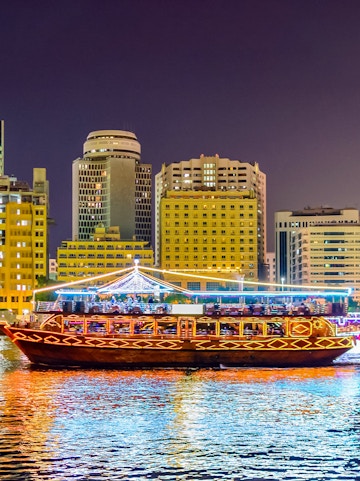
The abra is a flat-bottomed wooden ferry that has shuttled people across Dubai Creek since before the oil era. Your guide manages the boarding. The crossing takes five minutes.
The souks, with context
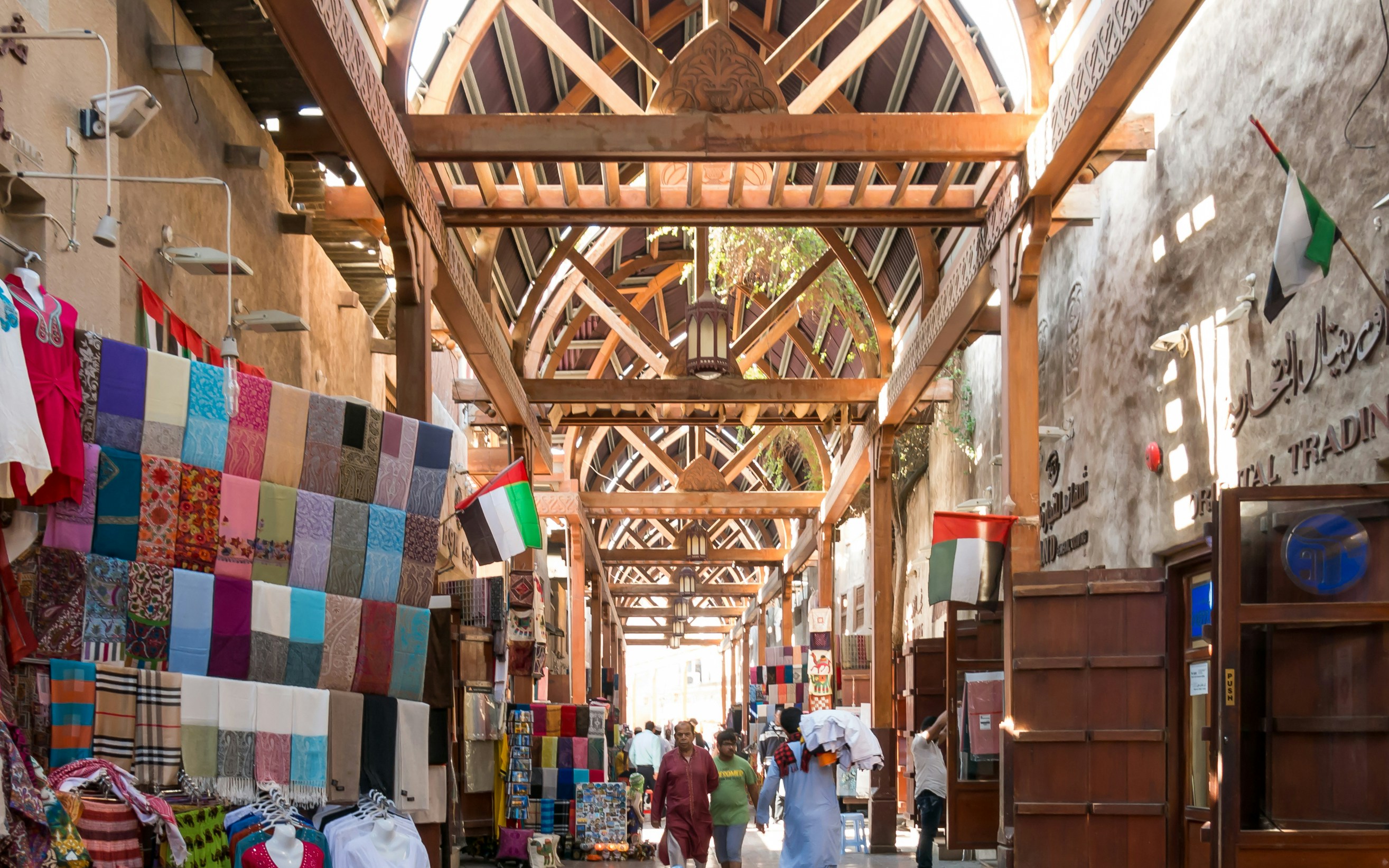
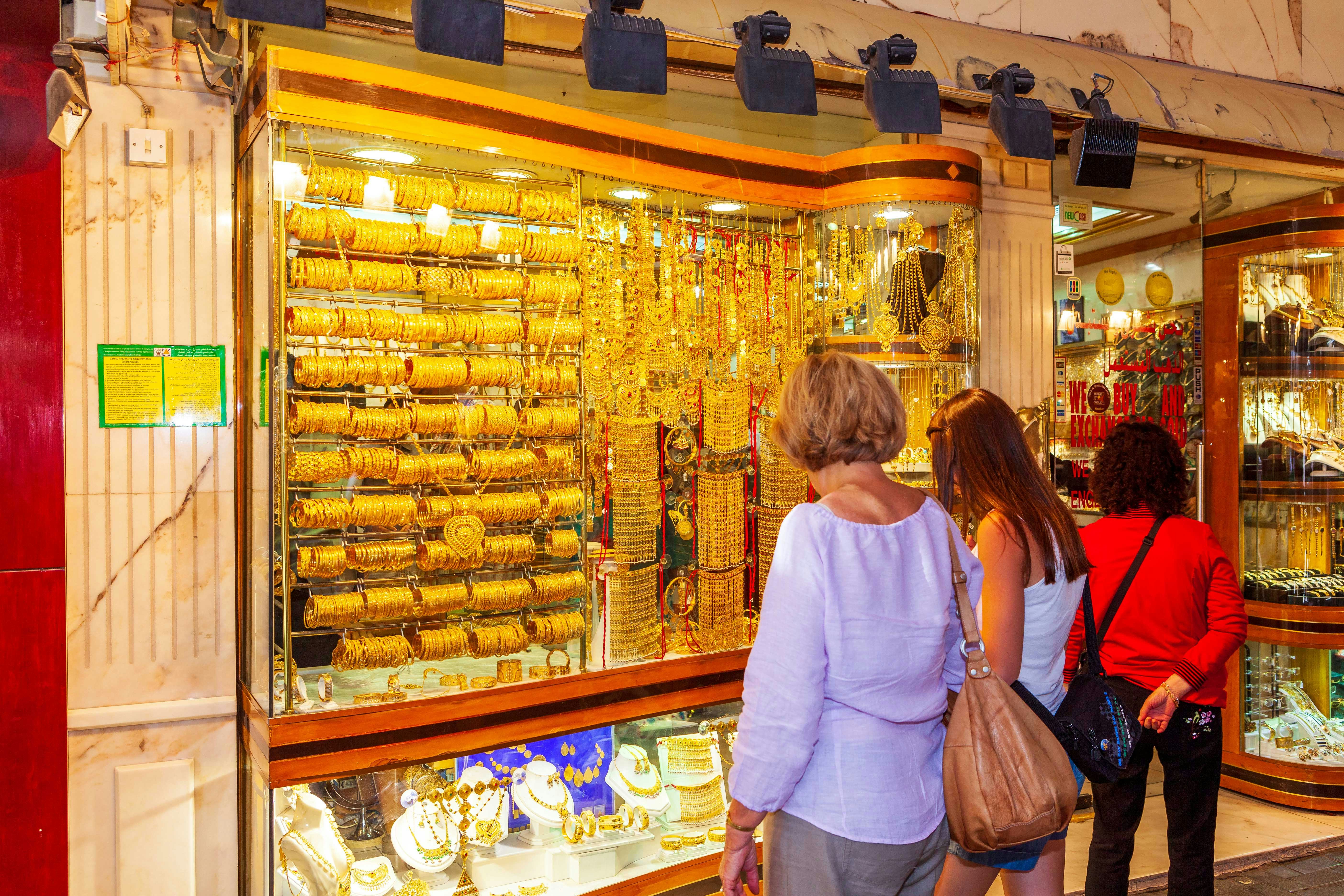
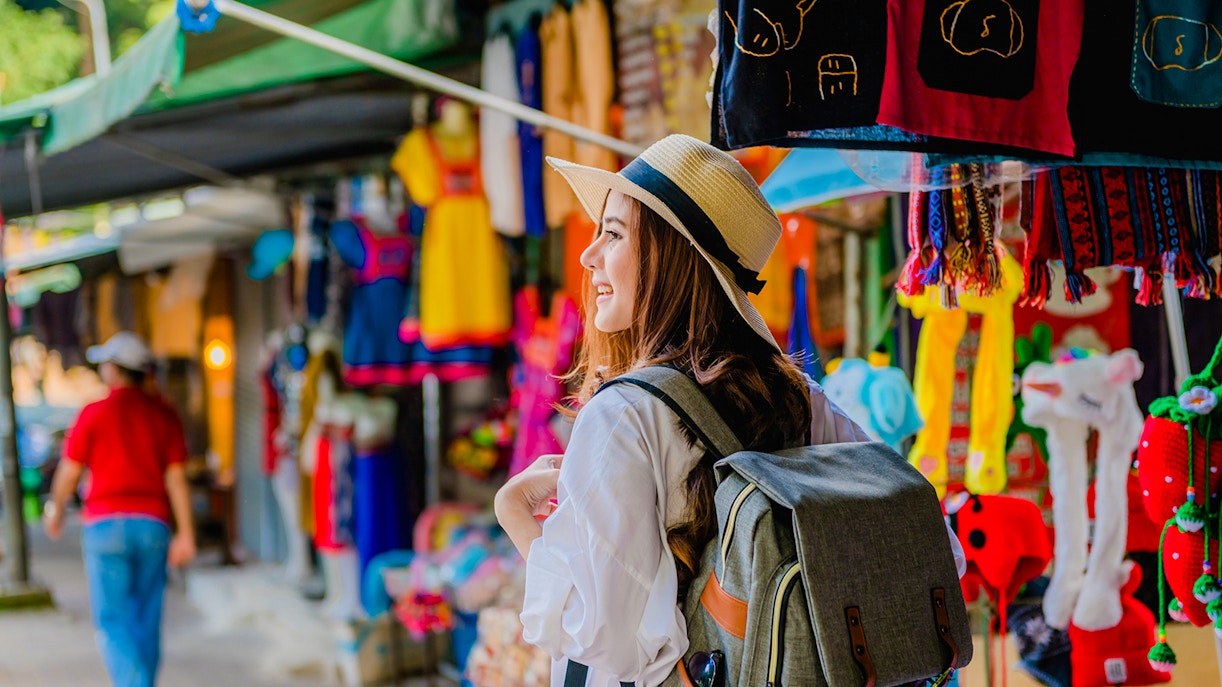
The Gold Souk has 350+ retailers. The Spice Souk has 145 shops. Without a guide, it's overwhelming. With one, you know what carat stamps mean, what a fair price looks like, and which lane to walk down.
Modern Dubai from the right vantage points
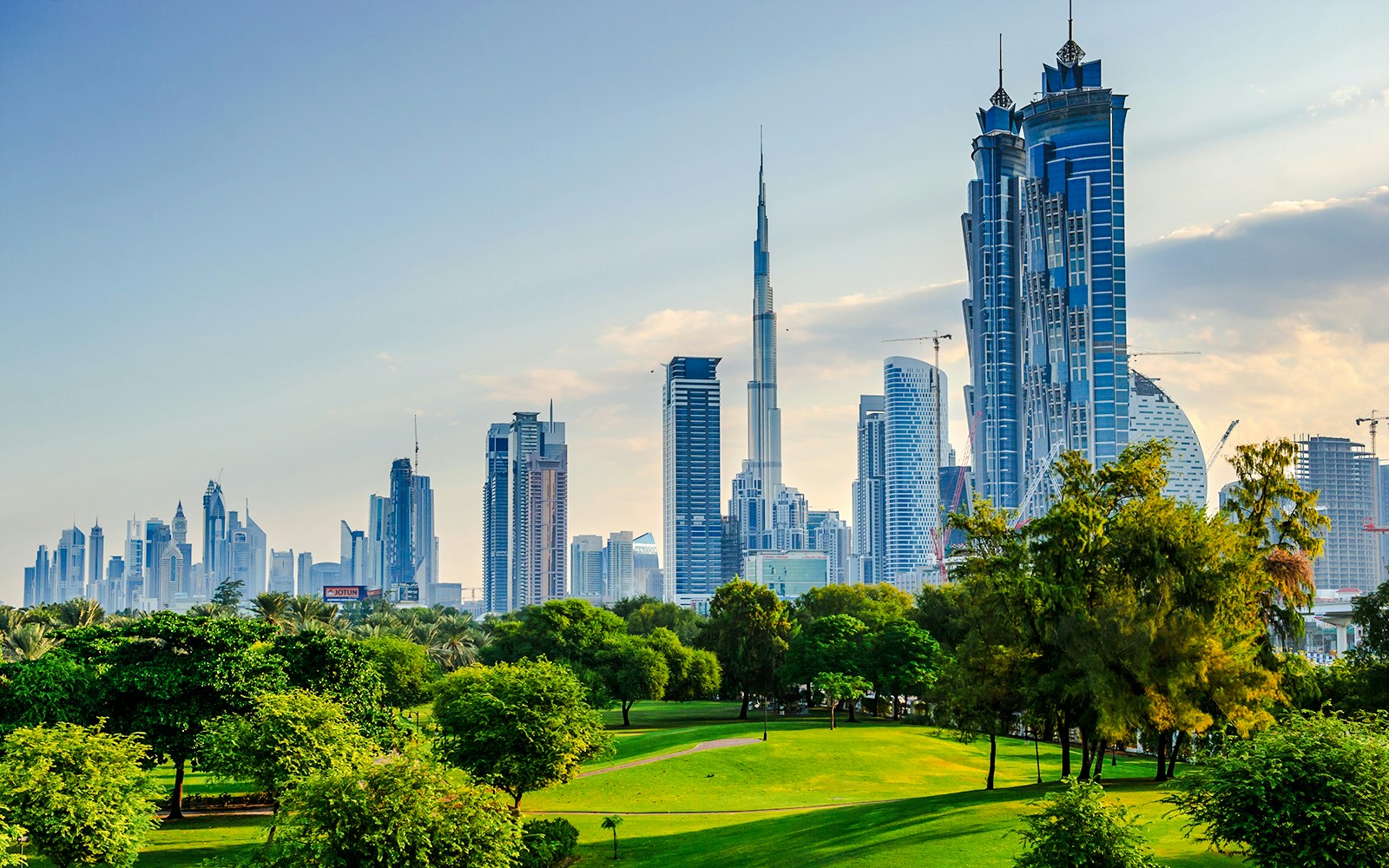
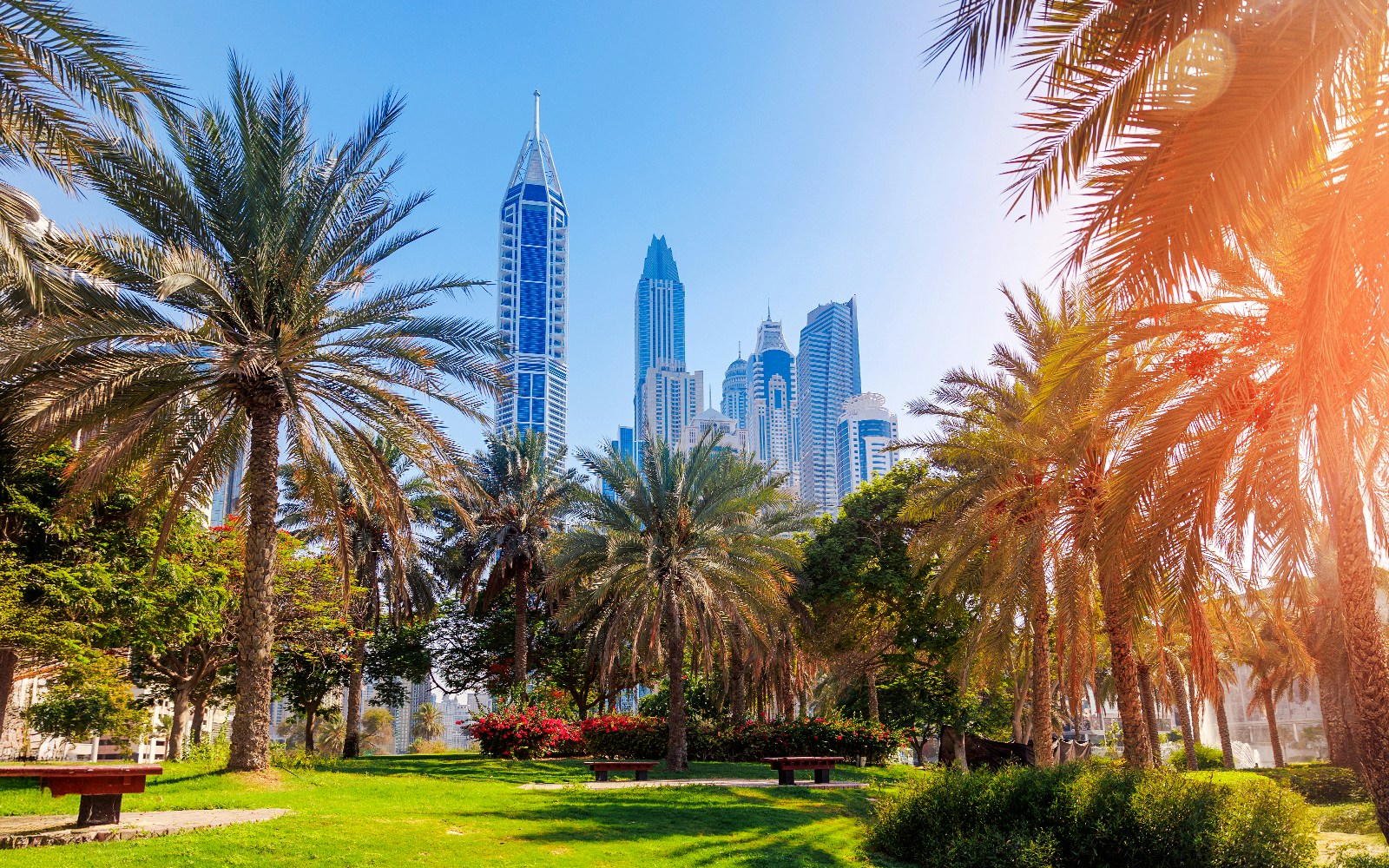
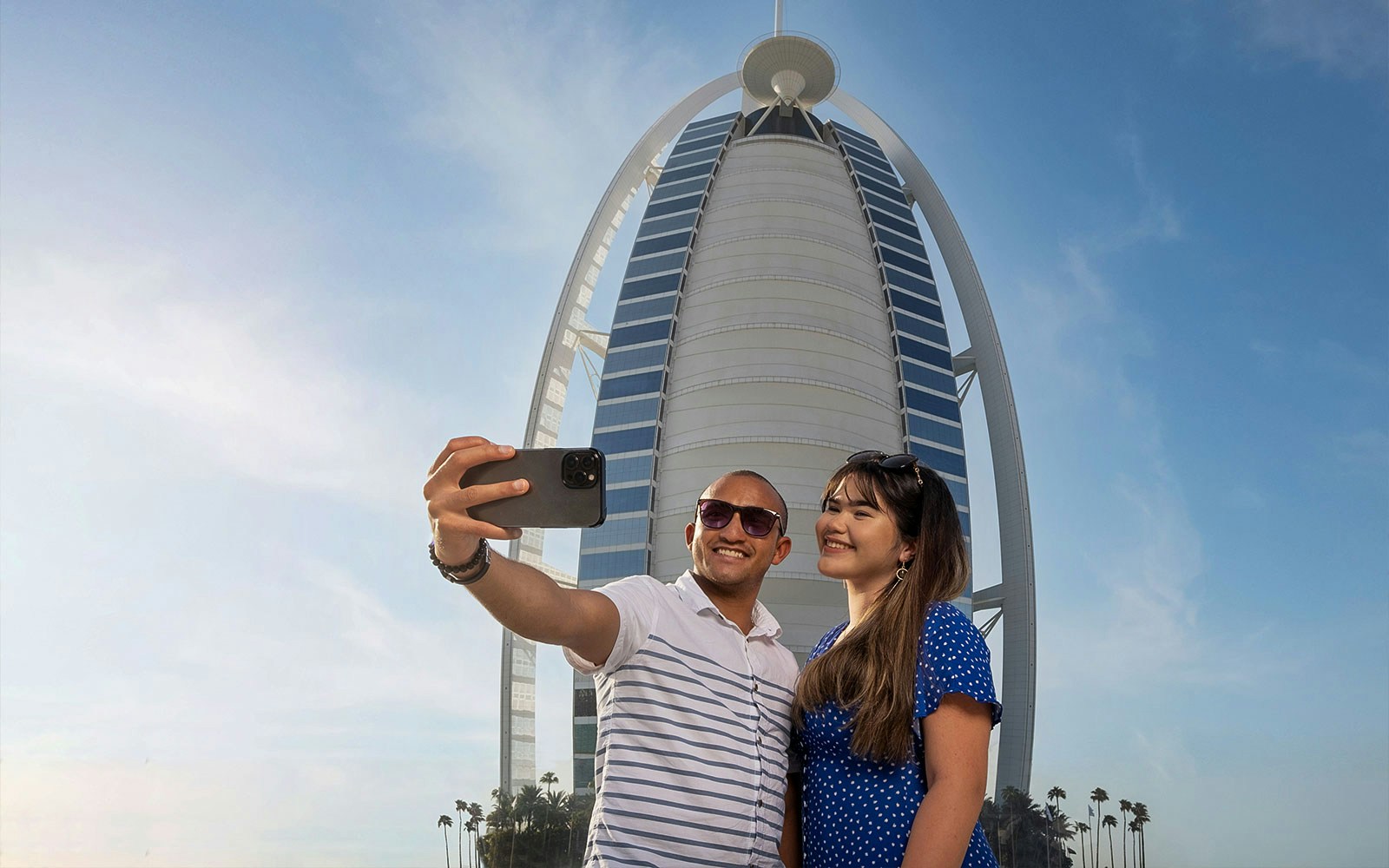
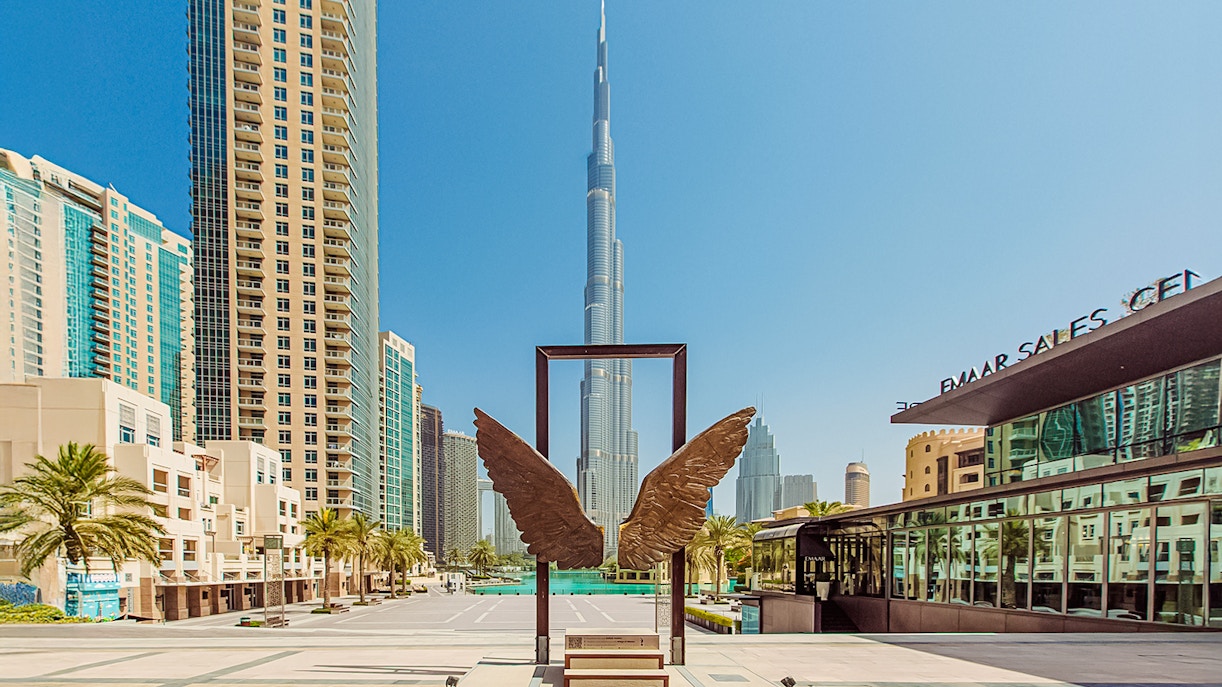
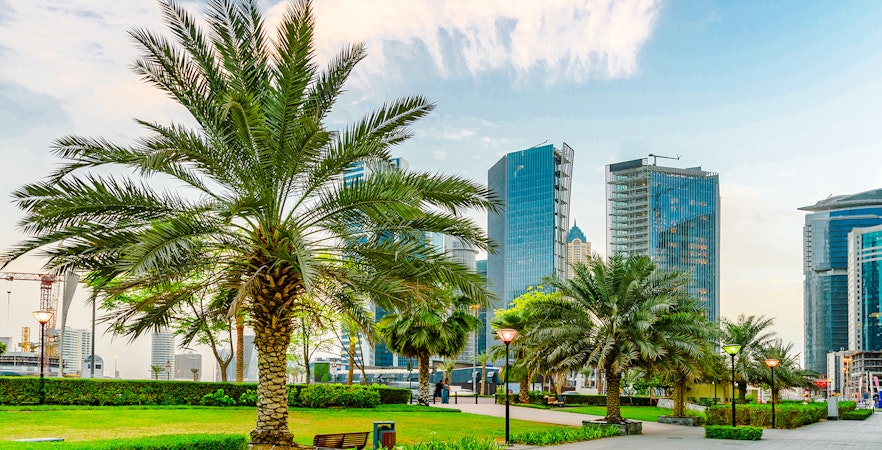
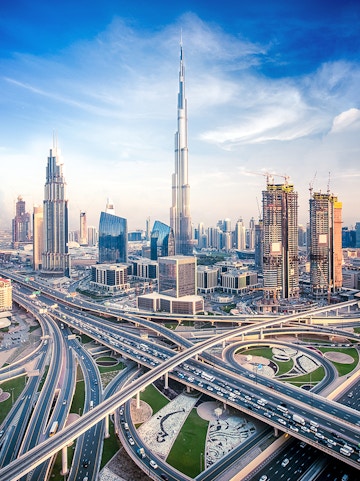
The Burj Al Arab photo stop, Palm Jumeirah, Sheikh Zayed Road; your guide positions you at the angles most visitors spend an hour finding on their own.
Drop-off at your hotel (most tours)
The tour ends where it started. No navigating back, no transit, no figuring out a taxi at the end of a long day.
Things to know before booking your Dubai city tour
Plan ahead:November to March is peak season. Tours sell out faster and prices are higher. Book at least a week in advance during this window.
Half-day tours run 4–5 hours and cover either Old Dubai or New Dubai highlights, not both. Full-day tours run 7–8 hours and cover both sides of the city in one go. The 3-hour snapshot tour is ideal if you are short on time for a drive through old and new Dubai.
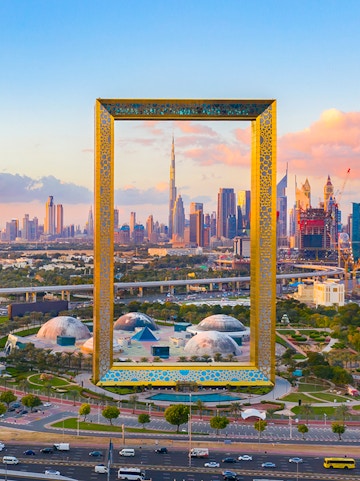
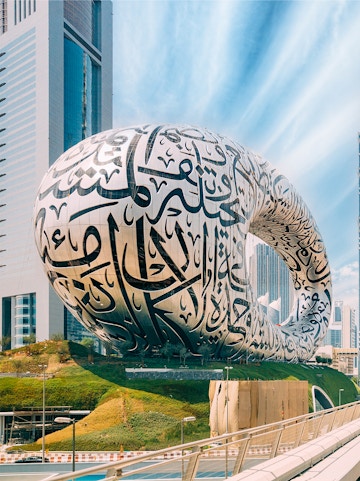
Most standard tours do not include attraction entry tickets. Burj Khalifa At the Top, Dubai Frame, and Museum of the Future all require separate tickets unless stated otherwise.
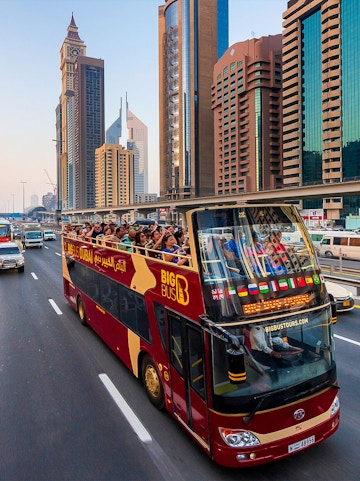
Hotel pickup and drop-off are included on most guided tours. Hop-on hop-off passes do not; you travel to the nearest stop independently.
Book the morning slot if you can. Pickup around 8am means cooler temperatures, less souk crowd, and the Spice Souk fully open. Afternoon tours risk arriving during the 1–4pm closure.
Travelling with four or more people? Run the private tour numbers. The per-person cost of a private Dubai city tour drops significantly at group size, and you get a flexible schedule on top of it. Shared tours follow a fixed itinerary. Souk stops are 20–30 minutes each.
Cover shoulders and knees at cultural stops, including Jumeirah Mosque. Women should carry a lightweight scarf. Closed-toe shoes recommended; souk floors are uneven near spice stalls.
The abra ride costs AED 1 and is cash-only. Your guide manages boarding on most tours, but carry coins as backup. The traditional abra is not wheelchair-accessible, and the rocking motion may be uncomfortable if you have back or mobility issues — request a water taxi alternative when booking (same creek crossing, covered and air-conditioned, AED 2).
Summer visits (June–August): Always pick a morning slot. Temperatures exceed 40°C, and outdoor souk stops get uncomfortable fast. All vehicles are air-conditioned, but the heritage walk is outdoors.
Want the city at night?An evening tour covers Dubai's landmarks like the Burj Al Arab and the Dubai Fountain show, but without an abra ride or a souk walk.
Want to eat your way through Old Dubai instead of just walking it?The food tour adds Arabic coffee, dates, and souk street food tastings to the heritage route.
Highlights of your Dubai city tour experience
The abra crossing
A flat-bottomed wooden ferry, AED 1, five minutes across Dubai Creek. The same route Deira residents have used for over 150 years.
Plan your Dubai City Tour Experience
Operating hours: Guided city tours traditionally depart in the morning (around 8:00 AM) and early afternoon (approximately 2pm) with hotel pickup included.
Last departure: Final departures occur by late afternoon, with strict cutoff times to ensure completion within the scheduled window.
Best time of day to go: Morning tours benefit from softer light, cooler temperatures, and a quieter atmosphere.
Visitor pace: Tour durations typically run for four to five hours for half-day versions and extend for full-day experiences when additional stops are included.
Best season or month to visit: November through March offers mild temperatures and lower humidity, enhancing overall comfort.
Location: Central pickup occurs in Downtown Dubai near the Burj Khalifa/Dubai Mall area, serving as a key orientation point.
Address: Dubai Mall, Downtown Dubai, Dubai, United Arab Emirates.
Getting there by metro: The Red Line station near Dubai Mall provides an efficient entry point.
Getting there by taxi: Reliable taxi services or rideshares are readily available.
Additional details: Official hotel transfers are pre-arranged, removing the need for independent transit planning.
Lightweight, breathable clothing is recommended to guard against Dubai’s heat, especially in outdoor segments.
Comfortable, closed-toe shoes are advisable as short walks are sometimes required at stops.
A modest dress code applies at cultural sites; carrying a lightweight scarf is beneficial.
Sunblock, sunglasses, and a hat help mitigate sun exposure during outdoor viewing.
Minimal carry-ons facilitate boardings and de-boarding procedures while ensuring ease of movement.
Tips & guidelines
Wear modest clothing at cultural stops. Cover shoulders and knees at Jumeirah Mosque and Al Fahidi. Lightweight fabrics work fine.
Closed-toe shoes for the souk walk. Souk floors are uneven and can be slippery near spice stalls. Sandals and flip-flops make the 2–3km heritage walk uncomfortable.
Carry AED 1 coins for the abra. Cash-only, paid directly to the boat driver. Your guide usually covers it, but have coins as backup.
Sunscreen applies year-round. November to March feels mild but UV levels stay high. Outdoor stops like the abra boarding, souk lanes, and Burj Al Arab viewpoint all add up to real sun exposure.
Morning tours run cooler and quieter. Souk crowds build through the day. June to August, anything outdoors after 10am is uncomfortable, regardless of the season you're visiting in.
Bargaining in the Gold Souk is normal. Open with a lower number, stay polite, and walk away if the price doesn't move — it usually does. Your guide can advise on what a fair price looks like before you enter.
Keep valuables close in the souks. Busy covered markets with narrow lanes. A crossbody bag worn at the front is practical. You won't need anything valuable out except your phone for photos.
Frequently asked questions about Dubai city tours
Half-day tours usually run 4–5 hours, while full-day tours last 7–8 hours. These include hotel pickup, an air-conditioned coach, and guided commentary at landmarks like Burj Khalifa, Jumeirah Mosque, and an abra ride across Dubai Creek.
Yes, most guided Dubai city tours provide complimentary hotel pickup/drop-off from central areas such as Downtown, Deira, or Jumeirah. Confirm your pickup location during booking as it may vary with tour operator and specific itineraries.
Tours usually feature a blend of modern and heritage sites including Burj Al Arab photo stops, Jumeirah Mosque, abra rides, Gold and Spice Souks, and other key landmarks. Check your specific itinerary for exact stops and any optional add-ons.
Yes. For mosque visits like at Jumeirah Mosque, cover shoulders and knees; women may need a scarf to cover hair. Aside from that, casual, comfortable clothing and closed-toe shoes are recommended for walking and outdoor stops.
Yes, most tours offer an English-speaking guide by default. Some operators provide additional language options such as German, Spanish, or Arabic. Check the tour details before booking to select your preferred language option.
Most operators allow free cancellation up to 24 hours before the tour begins. Review the specific cancellation policy at booking to confirm exact terms and ensure changes or refunds, if needed.
Many guided tours offer accessible, air-conditioned coaches with ramp access. However, the traditional abra ride may not be wheelchair-friendly. It’s best to inform the operator in advance to explore possible alternatives.
Yes, the traditional abra ride across Dubai Creek usually costs AED 1 per crossing and is cash-only. Make sure you carry small change as this fee is not included in the ticket price.
Standard tours include photo stops only at attractions such as Burj Khalifa or Dubai Frame. Entrance tickets for interior visits are typically not included unless explicitly stated as an add-on option.
Pack a light jacket, comfortable walking shoes, sunscreen, a bottle of water, and some AED 1 coins for the abra ride. Additionally, bring a hat and sunglasses for sun protection, especially during warmer months.
Many tours pre-purchase tickets to help skip long queues at busy attractions. However, security screenings may still involve a brief wait. Your guide typically coordinates these stops to minimize delays.
On fixed shared tours the itinerary is set. Private tours, however, offer flexibility so you can request additional stops or modifications. Contact the operator beforehand if you have specific preferences or need a custom route.
Dubai City ToursCrafted by Headout, a global experiences brand offering curated tours, tickets & experiences. Discover with ease, book with peace.